

Industrial Ear Piercing: What You Should Know

You should be aware of essential facts about industrial ear piercings before you get one. Like how it takes several months to heal, what the piercing feels like in the first few days after getting it, and how it is not for beginners. We also cover the things that surprise clients most during healing, as well as what piercers wish more people knew before booking.
If you are ready to get an industrial ear piercing in Mississauga, contact Xtremities Tattoo and Piercing at (905) 897-3503.
Keep reading to learn tips and facts about industrial ear piercing.
Industrial is Not Really a Beginner Piercing
An industrial piercing is one of the more demanding piercings to get. So, it is often better as a second or third cartilage piercing than a first.
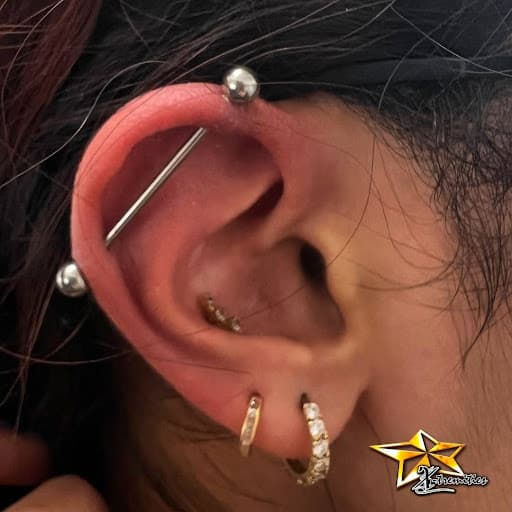
An industrial is two connected cartilage piercings joined by one long bar across the upper ear. That means twice the healing tissue, twice the snag risk, and one shared piece of jewellery that moves both piercings at once.
If you have never had a helix, tragus, or other cartilage piercing before, you have no baseline for how you sleep, style your hair, or dress around a fresh cartilage piercing Many piercers suggest getting one simpler cartilage piercing first and learning what works for your body.
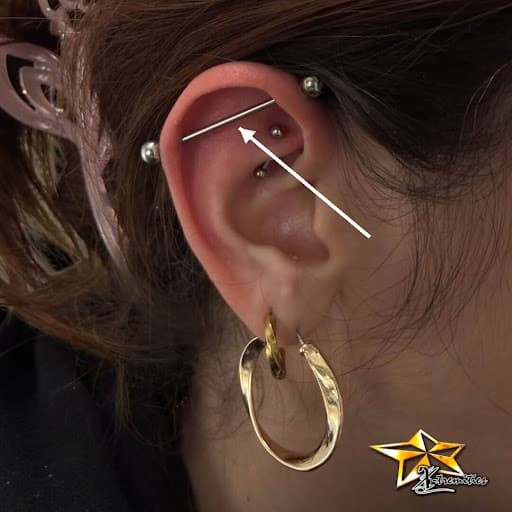
The Second Hole May Hurt More Than the First
With an industrial, the second piercing may feel sharper than the first. Two things happen at once. Your adrenaline from the first piercing starts to fade before the second needle passes through, and the tissue near the first hole is already tender. Some clients say the second one is only a bit sharper. Others say it is noticeably sharper.
Either way, the pain is still brief. Each needle passing through cartilage takes about a second, and the sharp part fades within seconds. What remains afterward is a warm, throbbing feeling for a few hours. If that helps you plan, know that most people rate the experience as manageable.
Eat Something Before Your Industrial Piercing Appointment
Having a proper meal before an industrial piercing helps you avoid feeling faint or lightheaded. Low blood sugar is a common reason people feel dizzy or shaky during or after a piercing. Your body responds to the piercing with a small stress reaction, and that response is much easier to handle on a full stomach.
Try to eat a balanced meal one to two hours before your appointment. Include some protein and some carbs. Drink water throughout the day. If you tend to faint easily, bring a sugary drink or a small snack for right after the piercing. Skip alcohol the night before and day of, since it thins the blood and can cause more bleeding.
Industrial Ear Piercing May Hurt More in Winter
Some people find that cold air moving through a fresh industrial bar is painful, so timing it outside the coldest months can help. A traditional industrial has an open bar sitting across the outer ear with jewellery exposed on both sides. Wind and cold air can hit the healing tissue directly, and thin cartilage has little blood flow to warm it back up.
There is also the scarf and hat problem. In winter, scarves and hats brush the ear all day. Each rub pulls at the bar and can slow healing. If you can, plan the piercing for early spring or early autumn. Not a hard rule, just something to consider.
The Industrial Bar May Snag on Everything at First
A fresh industrial bar catches on hair, hairbrushes, hoodies, and shirts. Each snag can hurt and slow healing. The bar sits outside of the ear, so it acts like a hook for anything nearby. This is one of the biggest daily challenges of a fresh industrial piercing.
A few simple habits help. Tie long hair back, especially at night. Use a wide-tooth comb and start at the ends. Choose button-up shirts for the first couple of weeks so you do not pull anything over your head. Take extra care when putting on hoodies, sweaters, and turtlenecks. Skip earbuds and over-ear headphones until the piercing has settled.
Plan to Keep Pressure Off It for Several Months
Expect to avoid sleeping on the industrial side for several months while the cartilage heals. Pressure is one of the top factors that slow industrial recovery. Each night you press the bar into a pillow, the jewellery pushes into new tissue. Over weeks and months, that adds up.
You do not have to sleep on your back forever. Most clients aim to keep pressure off for the first three to six months, then ease back into their normal sleep position as healing settles. Helmets, phone calls, and headphones also press on the ear, so plan around those too.
A Travel or Donut Pillow Can Really Help
A travel or donut pillow with a hole in the middle can make side-sleeping much more comfortable while an industrial heals. It looks like a small ring, and you lie your ear over the hole so the bar hangs in the space. No contact with the pillow, no pressure on the jewellery.
These pillows are cheap and easy to find. You can pick one up online for around $20-$30. Some people use a rolled-up towel with a small dip cut into it as a free version. Either way, it helps you sleep on the pierced side without setting back your healing. That alone is worth the price.
Use Saline Only for Aftercare, and Skip the Old-School Remedies
Modern aftercare for an industrial piercing is simple. Use sterile saline twice a day, and leave it alone. Bad advice will tell you to use homemade salt soaks, tea tree oil, antibiotic ointment, or hydrogen peroxide. All of it is outdated. Harsh cleaners like peroxide dry out the tissue and slow healing. Ointments trap bacteria against the piercing. Homemade salt mixes are often too strong or too weak.
Stick to a sterile saline spray from a local pharmacy or your piercer. Spray both sides of each hole once in the morning and once at night. Pat dry with a fresh paper towel. That is it. No twisting, no soaking, no ointments, no rubbing.

Know the Difference Between Irritation and Infection
Learn to tell a normal irritation bump from a possible infection so that you react calmly instead of panicking. Small bumps near a fresh cartilage piercing are common. Many times they are irritation, not infection. Irritation is caused by tight sleep pressure, a snag, or the wrong cleaner.
Irritation looks like mild redness right at the piercing, a small bump, and clear or slightly cloudy fluid. It comes and goes based on triggers.
Infection is different. Redness spreads outward, pain worsens over days rather than improving, discharge becomes thick and yellow or green, and the area feels hot to the touch. Fever or feeling unwell alongside those signs means it is time to see a doctor.
If It Ever Gets Infected, Don't Take the Jewellery Out Yourself
If you suspect an infected industrial piercing, keep the jewellery in and see a professional. Removing it can trap the infection inside. This is an important safety point to know. Piercing holes can close on the outside while bacteria remain inside. Once the surface closes, the infection has nowhere to drain, and it can turn into a deeper abscess.
The safer path is to leave the bar in and see your piercer or a doctor. Most piercers can look at your ear and tell you whether it is irritation or something more. If it is an infection, the healthcare provider will guide treatment while the jewellery remains in place.
Not Every Ear Can Take an Industrial, and That's Okay
An industrial only works if your ear has the right ridge and angle to hold the bar without pressure. So, not everyone's ears are qualified. The bar needs to sit across the outer helix without pressing on the flat of your ear. If your ear folds inward or your helix is more flat than curved, a straight industrial bar will rest on cartilage. That can cause constant irritation and bumps.
A good piercer will look at your ear before agreeing to do the piercing. If your ear is not suited, they might suggest a floating industrial, a chain industrial, or two separate cartilage piercings you can connect later. Hearing no from a piercer is a good sign, not a bad one. It means they care about the outcome.
Don't Let the Horror Stories Scare You Off. Just Go In Prepared
There are bad experiences with industrial piercings, but plenty of people also love theirs and heal smoothly. A good piercer, the right anatomy, and careful aftercare give you a strong chance of a good outcome.
An industrial piercing rewards patience more than any other. If you go in with realistic expectations, follow the aftercare, and keep in touch with your piercer along the way, the piercing will likely turn out okay.
An Industrial Piercing Is an Affordable Way to Make a Big Statement
You can get an industrial piercing at a modest price. At Xtremities, industrial piercings start from around $60. We also run regular piercing discounts throughout the year, including our 3-for-1 offer where you can get three piercings for the price of one. Downsizing at 6 to 10 weeks and future jewellery changes may be included for free. Ask about current deals when you call.
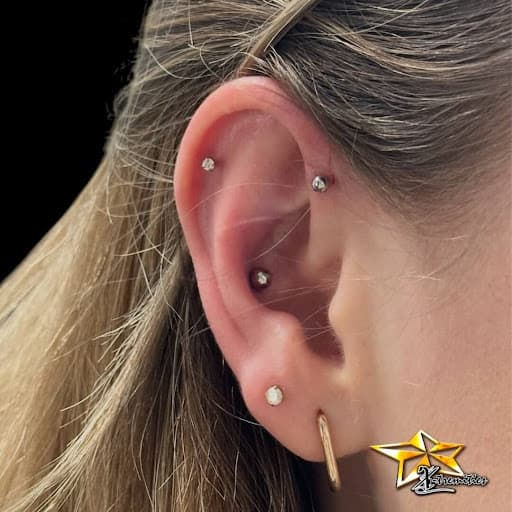
Choose Your Jewellery Material Carefully
The metal in your industrial bar affects how well it heals, so insist on implant-grade materials. Cheap metals can contain nickel, which is a common allergy trigger. A nickel reaction looks a lot like an infection, with redness, itching, and clear fluid. And it can go on for months while you try to fix it with cleaning.
Ask for implant-grade titanium, surgical steel, or gold. All three are considered safe for fresh piercings. At Xtremities, we start every industrial piercing on implant-grade jewellery so healing has the best chance from day one. We also use a straight barbell that is slightly longer than the downgrade piece, to leave room for swelling.
Go to a Reputable, Experienced Piercer, and Confirm the Basics
The single biggest factor for a good industrial piercing is choosing a trusted and experienced studio. A studio that uses a piercing gun for cartilage is a hard no. Guns can crush the tissue. Look for a studio that uses single-use needles.
Before booking, check a few basics. The studio should use gloves and sterile equipment. The piercer should have visible credentials and do industrial piercings regularly. Ask to see healed examples of their industrials. A good piercer will happily answer questions and never rush you into a decision.
Xtremities Tattoo and Piercing Has Over 20 Years in the Industry
If you are in Mississauga and thinking about getting an industrial ear piercing in Mississauga, Xtremities Tattoo and Piercing can check whether your ear is suitable. We do an anatomy check first, use fresh single-use needles, and start you on implant-grade jewellery. Downsizing at 6 to 10 weeks is included free.
Our studio is on Dundas Street West, half a block west of Hurontario. We take walk-ins seven days a week.
Call (905) 897-3503 to book a visit.
Don't Try to Numb It or Show Up Impaired
Skip the DIY numbing creams and do not arrive drunk or hungover. Both make the piercing and healing harder. Numbing creams change how the skin behaves under the needle, which can affect placement. They can also cause reactions you did not plan for.
Alcohol is another problem. It thins your blood, which means more bleeding during the piercing and slower initial healing. It also lowers your judgment. Most reputable studios will refuse to pierce anyone who has been drinking. Skip alcohol for the 24 hours before your appointment. Skip aspirin and ibuprofen right before too, since both thin the blood. Ibuprofen after the piercing is fine.
Be Patient, and Follow Up With Your Piercer
An industrial piercing rewards patience. Plan for the long healing journey and lean on your piercer along the way. Expect 6 to 12 months for full healing, and up to 18 months in some cases. Come back for the downsize around 6 to 10 weeks. Ask questions if anything looks off, instead of guessing or reading random forums.
Treat aftercare like a marathon, not a sprint. Some weeks feel fine. Others feel like a setback. That is normal. Your piercer has seen every version of the healing curve and can tell you whether what you are seeing is on track.
Frequently Asked Questions
Can I get an industrial piercing if I wear glasses regularly?
Yes, but plan for some adjustment. Glasses usually sit behind the ear near the helix, which is exactly where a straight industrial bar sits. Thick or tight frames may press against the bar and cause soreness. Try lighter frames, adjust the arms to sit farther back, or switch to contacts during the first few weeks of healing.
Should I take out my industrial jewellery for an MRI?
It depends on the metal. Implant-grade titanium is MRI-safe and can stay in for most scans. Surgical steel is usually fine too, but always tell the technician what your bar is made of before the scan. If your industrial is still healing, ask a piercer to swap in a non-metal retainer so the holes do not close during the procedure.
Can I fly after getting an industrial piercing?
Yes, air travel does not damage a fresh industrial piercing. What matters is the environment. Cabin air is dry, and the seatback can press on your ear. Bring a small sterile saline spray in your carry-on. Skip over-ear headphones and use a travel pillow so your ear does not press into the headrest. Wash your hands before touching the piercing during a long flight.
Can I dye my hair while my industrial piercing is healing?
Wait at least a few weeks after your piercing before dyeing your hair. Hair dye chemicals can irritate a fresh piercing if they touch the healing tissue. When you do dye your hair, ask your stylist to keep the product off your ears. Cover the bar with a small piece of plastic wrap if there is any risk of contact.
Can I still work out with a fresh industrial piercing?
Yes, you can keep working out. Sweat by itself is not the problem. What you want to avoid is sweat on the piercing for hours, tight sweatbands, and anything that presses on your ear. Rinse the area with saline after your workout and pat it dry with a fresh paper towel. Skip the pool, hot tub, and sauna for at least two weeks.


Reffered from headcovers unlimited I purchased several items and my experience has been overwhelmingly positive. The quality of the beauty supplies is exceptional, with each product designed for both functionality and comfort. The headcovers fit perfectly and are incredibly soft, making them a pleasure to wear throughout the day. Additionally, the customer service was responsive and helpful, ensuring that my order was processed smoothly. Overall, I highly recommend Headcovers Unlimited for anyone seeking reliable and stylish beauty equipment.