

What to Know Before Conch Ear Piercing | 13 Things

This guide covers 13 things to know before getting a conch piercing. Before booking your appointment, keep a few things in mind: healing takes 6 to 12 months from the inside out, and you’ll need to pop back in at 4 to 8 weeks to downsize your starter bar once initial swelling subsides.
Temporary delayed swelling and minor ache when smiling or chewing are totally normal. To keep healing smooth, spray with sterile saline twice daily, keep pressure off it (a piercing pillow works wonders!), and don't twist.
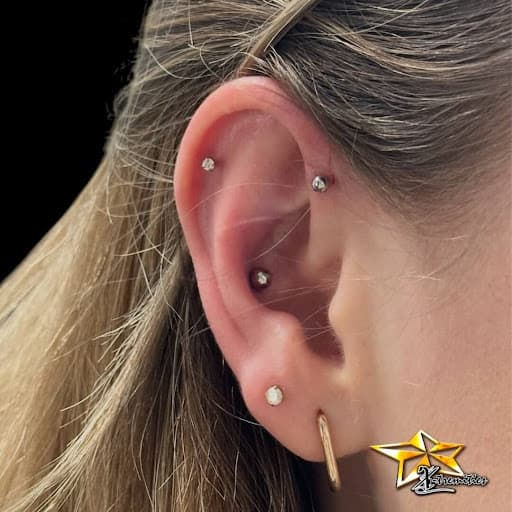
A conch piercing is one of the coolest ear piercings around. It is also one that people often book without knowing what to expect. If you are ready for your conch piercing, book with us at Xtremities Tattoo and Piercing in Mississauga. Starting at just $40 at Xtremities, it’s one of the easiest, lowest-snag cartilage upgrades you can get. Our studio has expert piercers who use safe, precise techniques to deliver beautiful conch piercings. Call (905) 897 3503.
Keep reading to learn all this in detail and more.

Cartilage Heals From the Inside Out. "Looks Healed" Isn't Healed
The tricky part of a healing conch piercing is that it can look fine long before it truly is. Cartilage heals from the outside in. The surface tissue closes and calms first, but the deeper cartilage keeps rebuilding underneath for months.
Many people feel their conch is fully healed at month two or three. Then they get a random flare-up out of nowhere. That is normal. Stick with the timeline, keep up with your saline routine, and do not change your jewellery early. What looks calm on the outside is still fragile inside for quite a while. A conch piercing takes between 6 and 12 months to fully heal.
Expect a Longer Starter Bar. Plan to Have It Downsized
Your conch piercing starts with a slightly longer bar. This is on purpose. The extra length gives your ear room to swell in the first few weeks without pressing the jewellery into new tissue.
Once the swelling has gone down, that long bar becomes the problem. It shifts and rocks, which slows healing. That is why we ask you to come back around 4 to 8 weeks for a downsize. Skipping this step is one of the most common reasons people say their conch took forever to heal. Downsizing takes five minutes and prevents a lot of problems.
Don't Panic If It Swells About Two Weeks In
Most people expect swelling right after the piercing. What surprises them is a second wave around week two. This delayed swelling is normal.
Your ear reacts in stages, and cartilage can hold onto fluid longer than soft tissue. If your conch feels tight or a little sore two weeks later, do not panic and do not switch cleaners. Keep spraying saline twice a day, don't sleep on that side, and give it a few more days.
The real signs of trouble are different. Spreading redness, thick yellow discharge, or pain that keeps getting worse are worth a medical check.
A Slight Ache When You Smile or Chew Is Normal at First
One of the more surprising things about a fresh conch piercing is that it can ache when you smile, laugh, chew, or turn your head. It sounds weird, but it makes sense.
Your ear moves a bit with every big facial expression and jaw movement. That tiny shift pulls on the healing tissue and creates a dull ache. This settles within the first week or two for most people.
It is not a sign that something is wrong. If the ache spreads down your neck or gets sharper each day, then it is worth calling your piercer.
For Many People, the Conch Is One of the Easier Cartilage Piercings
You will see some scary stories about conch piercings. Some are real, and we get to those below. But you will also find people who call it their easiest cartilage piercing to heal. Some side-sleepers even rank it easier than the helix and rook.
The conch sits deep in the ear, so it is somewhat protected from snags and knocks. Pain during the piercing feels sharp but brief, and many people rate it in the middle range for cartilage. Your experience will likely land somewhere in that range.
Try to Keep Pressure Off It for Several Months
Pressure is the biggest thing that slows a conch piercing's healing down. Every time you press that ear into a pillow, or put an earbud or a phone against your ear, you interrupt healing. This does not mean you have to protect it for a full year. But for the first several months, try to keep pressure off it as much as you can.
Sleep on the other side. Skip over-ear headphones for a while. Use your phone on speaker or on the other ear. If the pressure keeps up, the piercing may be sore or develop a small bump.
A Piercing Pillow Can Be a Really Helpful Purchase
A piercing pillow, sometimes called a travel pillow, with a hole in the middle, is one of the simplest hacks for a fresh conch. It looks like a small donut. You lay your ear over the hole so the piercing hangs in the empty space. No contact with the pillow, no pressure on the jewellery. You can find one online for around $20.
Some people also use a rolled-up towel with a small dip cut into it instead. Either way, the goal is the same. Give the ear a place to rest without weight on new tissue.

Irritation Bumps Are Common
A small bump near a healing conch piercing looks scary the first time, but it is almost always an irritation bump, not an infection. Something is bothering the piercing. It could be sleeping on it, tight headphones, or the wrong cleaner.
To keep bumps minimal, you just have to pay attention to aftercare. Sterile saline twice a day. No alcohol, no hydrogen peroxide, no tea tree oil, no antibacterial soap, no twisting the jewellery. If the bump does not shrink after a couple of weeks of clean, hands-off care, come see your piercer or a doctor. Sometimes the jewellery just needs a swap.
Leave the Piercing Alone. Twisting and Touching Is How Piercings Go Wrong
Older piercing advice said to twist your jewellery daily to keep the hole open. That is outdated. Twisting and rotating the jewellery breaks the delicate new tissue every time you do it. So does touching the piercing throughout the day.
The best thing for a healing conch is to spray saline in the morning, spray again at night, and then leave the piercing alone for the next 12 hours. Piercers have a name for this idea. They call it LITHA, short for "Leave It The Heck Alone." It sounds simple, but it works.
Headphones, Hairbrushes, and Pillowcases Become the Enemy
You do not realise how much stuff touches your ear every day until you get a fresh conch piercing. Over-ear headphones push straight into the jewellery. Earbuds can press the inner side of the ear if you have an inner conch piercing. A hairbrush snags on a stud when you tie your hair back. A pillowcase can catch it in your sleep. Long hair gets tangled around it in the shower. None of this is a reason to skip the piercing. Just know the enemies exist so you can plan around them for a few months.
Some Conchs Are Stubborn to Heal
Most conch piercings heal fine. But a small number of them are stubborn, even with careful aftercare. This is more common with cartilage piercings in general. If yours is slow, it does not mean you did anything wrong. What you can do is stack the odds in your favour.
Pick a reputable piercer who uses a needle, not a gun. Ask for implant-grade titanium or steel jewellery. Follow aftercare closely. Give it time. If your piercing still feels irritated after several months of clean care, book a visit so we can look at fit, angle, and jewellery.
No, a Conch Piercing Will Not Cure Your Migraines
You may have read that a conch or daith piercing can cure migraines or ease anxiety. There is no solid medical evidence for this. Doctors and headache researchers have looked. What they find is that the reports are mostly anecdotal, and much of the effect can be explained by the placebo response.
That does not mean people are lying about feeling better. It means a piercing is not a proven medical treatment. Get a conch because you love the look, not to fix a health condition. If you have migraines, talk to a doctor about care that actually works.
A Conch Piercing Is an Affordable Way to Upgrade Your Ear Statement
A conch piercing is one of the more affordable ways to add a real statement to your ear. For a modest price, you get the piercing, sterile setup, implant-grade jewellery, and clear aftercare guidance. Here at Xtremities, you can get a conch piercing for around $40.
Bundle offers may apply if you are getting more than one piercing in the same visit. Check out our current pricing details.
Book a Conch Piercing Appointment at Xtremities
If you are in Mississauga and ready for a conch piercing, expert piercers at Xtremities Tattoo and Piercing can walk you through it. We do a free anatomy check first, use a fresh single-use needle, and start you on implant-grade jewellery. Our studio is on Dundas Street West, half a block west of Hurontario. You can book online or visit anytime. We take walk-ins seven days a week.
Call (905) 897-3503 to book an appointment.
Frequently Asked Questions
Will glasses or sunglasses irritate a healing conch piercing?
Glasses and sunglasses usually sit on your ear behind the piercing, not on it. That means they rarely touch a conch piercing directly. Thicker frames or tight arms can push the ear forward and put pressure on the jewellery. If you feel any rubbing, try lighter frames or adjust the arms so they sit farther back on your ear.
Does having a cold or allergies affect conch piercing healing?
Yes, in a small way. Anything that stresses your immune system, from a cold to seasonal allergies, can slow healing. You may notice more crust or a bit of tenderness during a flare-up. This usually settles once you feel better. Stay hydrated, keep up with your saline routine, and try not to blow your nose too hard, since a hard blow shifts the ear slightly.
Does a conch piercing affect my hearing?
No, a conch piercing does not affect your hearing. The piercing goes through the outer cartilage of the ear, well away from the eardrum or the inner ear itself. Some people notice a brief sound change while the jewellery is being inserted, but that fades within seconds once the stud is in place. If you notice ongoing muffled hearing, ringing, or ear pain in the days after your piercing, see a doctor.


The how to contact lange I had the pleasure of shopping Beauty Supplies and Equipment, and I must say, their customer service was exceptional. From the moment I walked in, the staff greeted me warmly and were eager to assist with my needs. They took the time to answer all my questions and provided valuable recommendations tailored to my specific requirements. The atmosphere was inviting, making my shopping experience enjoyable and stress-free. I left feeling confident in my purchases and appreciated the genuine care they showed throughout my visit. Highly recommend!